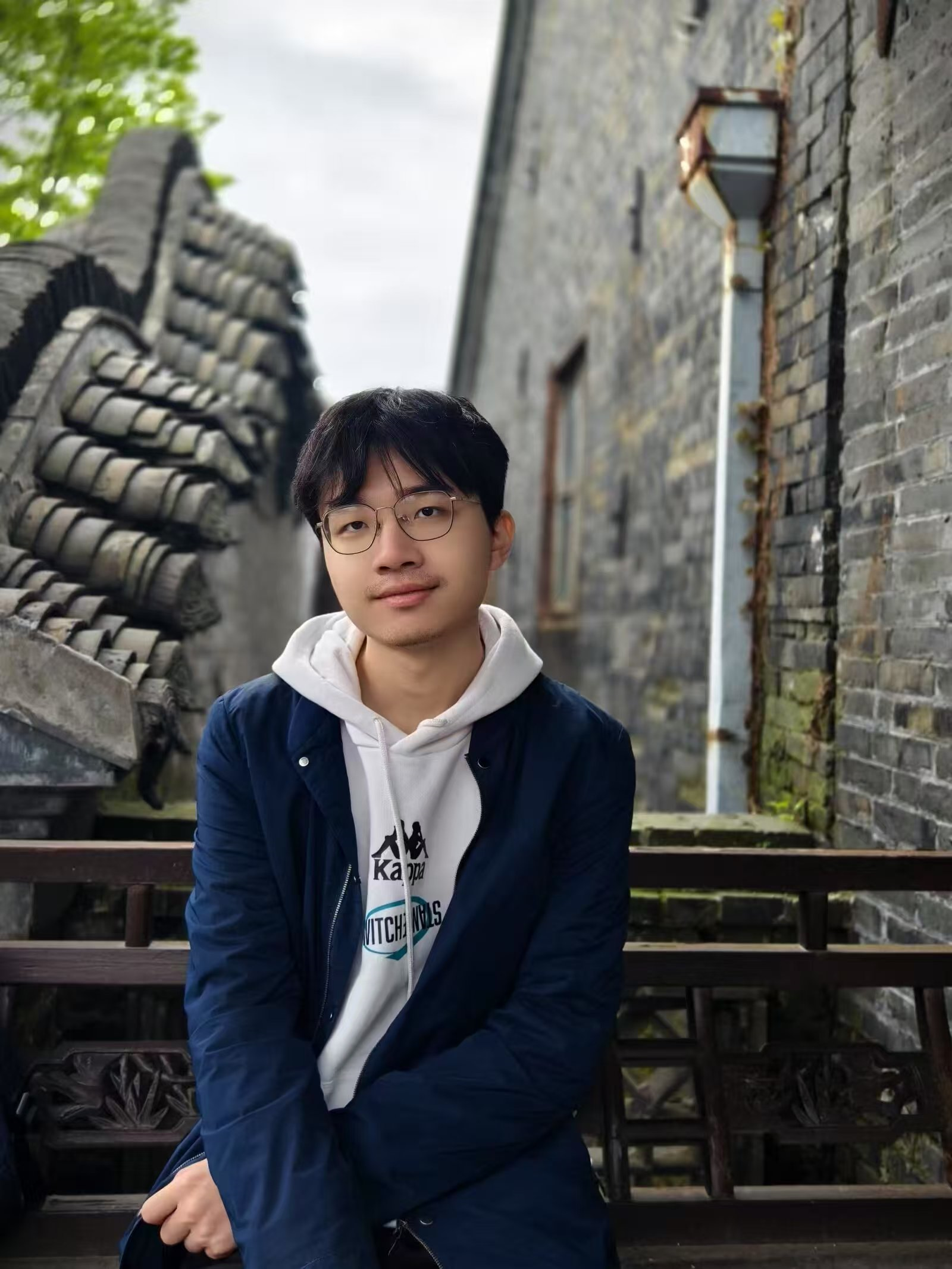
I am a third-year Ph.D. student from School of Information Science and Technology, Shanghaitech University supervised by Prof. Quan Li, and I also obtained a B.S. degree from the same university. My research focuses on human-computer interaction (HCI) and data visualization (VIS). My recent research focuses on exploring their applications in medical education.
🔥 News
- 2026.01: 🎉🎉 Our paper “Do I Trust the AI?” Towards Trustworthy AI-Assisted Diagnosis: Understanding User Perception in LLM-Supported Reasoning is accepted by CHI 2026.
- 2026.01: 🎉🎉 Our paper CaseMaster: Designing and Evaluating a Probe for Oral Case Presentation Training with LLM Assistance is accepted by CHI 2026.
- 2025.12: 🎉🎉 Our paper DesignBridge: Bridging Designer Expertise and User Preferences through AI-Enhanced Co-Design for Fashion is accepted by IUI 2026.
- 2025.09: 😊 Start my journey as a visiting student in HKUST VisLab.
- 2025.02: 🎉🎉 Our paper ReviseMate: Exploring Contextual Support for Digesting STEM Paper Reviews is accepted by CSCW 2025.
- 2025.01: 🎉🎉 Our paper Advancing Problem-Based Learning with Clinical Reasoning for Improved Differential Diagnosis in Medical Education is accepted by CHI 2025.
📝 Publications
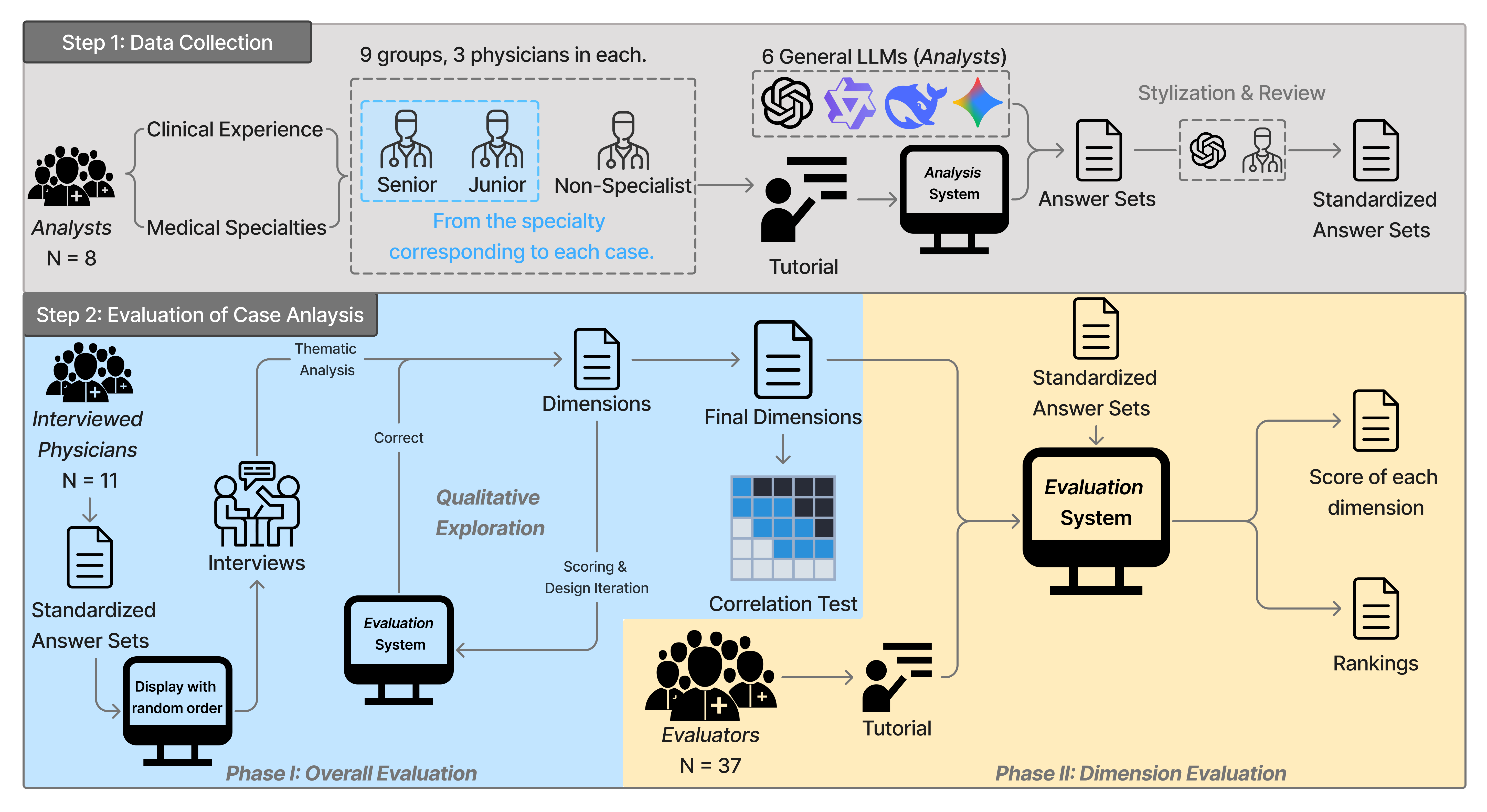
“Do I Trust the AI?” Towards Trustworthy AI-Assisted Diagnosis: Understanding User Perception in LLM-Supported Clinical Reasoning
Yuansong Xu, Yichao Zhu, Haokai Wang, Yuchen Wu, Yang Ouyang, Hanlu Li, Wenzhe Zhou, Xinyu Liu, Chang Jiang, Quan Li
PDF
This work aims to advance trustworthy AI-assisted diagnosis by reframing the evaluation of LLMs through the lens of physicians’ perceived capabilities. We show that clinicians assess multiple nuanced dimensions of clinical reasoning that are not fully captured by conventional benchmarks. By quantitatively linking these dimensions to overall judgments, we provide an interpretable framework for understanding how physicians form trust in AI-generated analyses. Our findings highlight the limitations of standard evaluation metrics and point toward perception-aware approaches that better align AI performance with clinical expectations, supporting more reliable human–AI collaboration in practice.
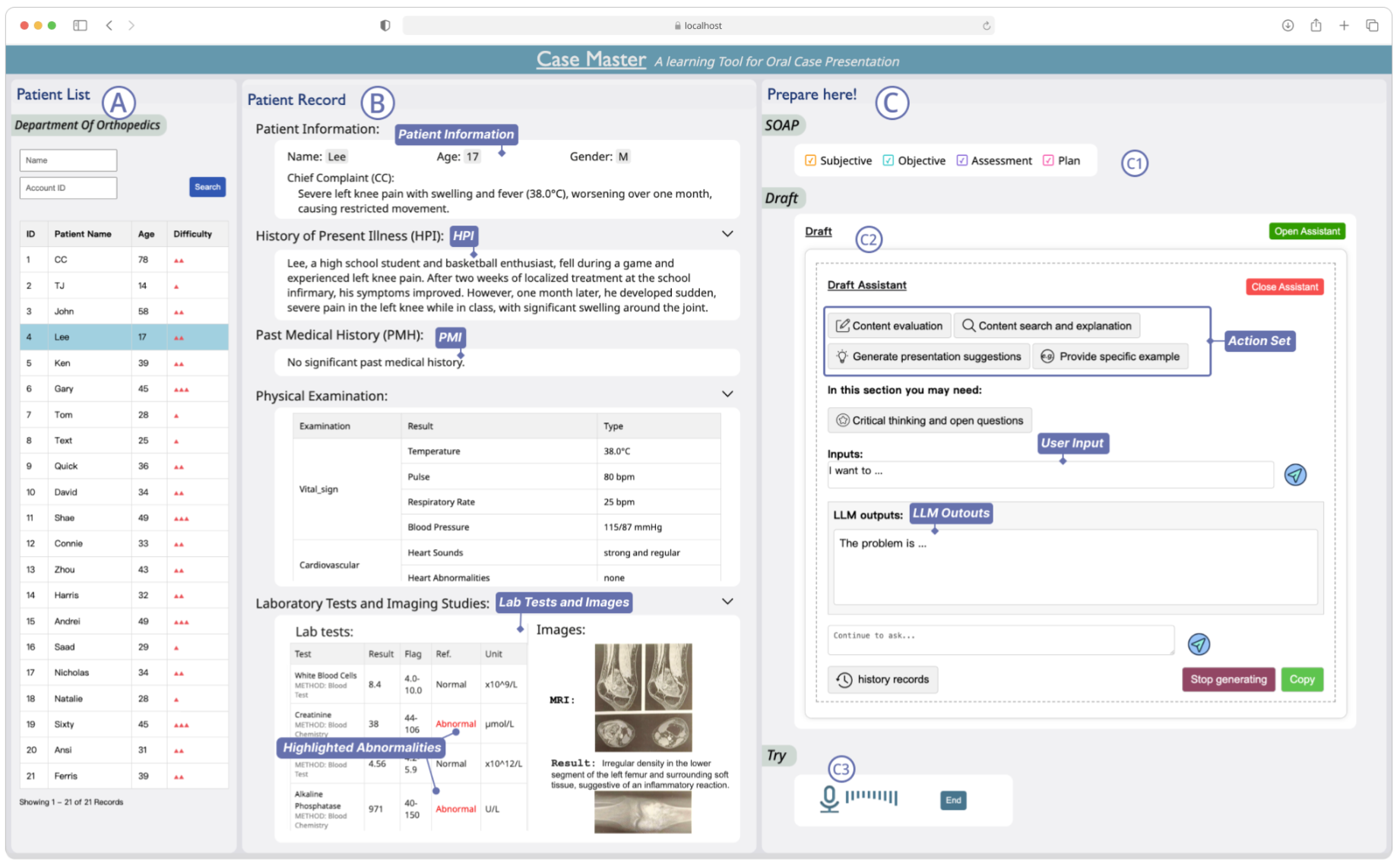
CaseMaster: Designing and Evaluating a Probe for Oral Case Presentation Training with LLM Assistance
Yang Ouyang, Yuansong Xu, Chang Jiang, Yifan Jin, Haoran Jiang, Quan Li
PDF
This work explores how to support medical students in preparing oral case presentations (OCP). We first conducted a formative study with medical educators, and then developed CaseMaster, an interactive system that uses LLM-generated content to guide students through the presentation process. Our study shows that CaseMaster can improve presentation quality while reducing workload compared to traditional methods. Based on these findings, we provide practical guidelines for integrating LLMs into medical education in a more adaptive and user-centered way.
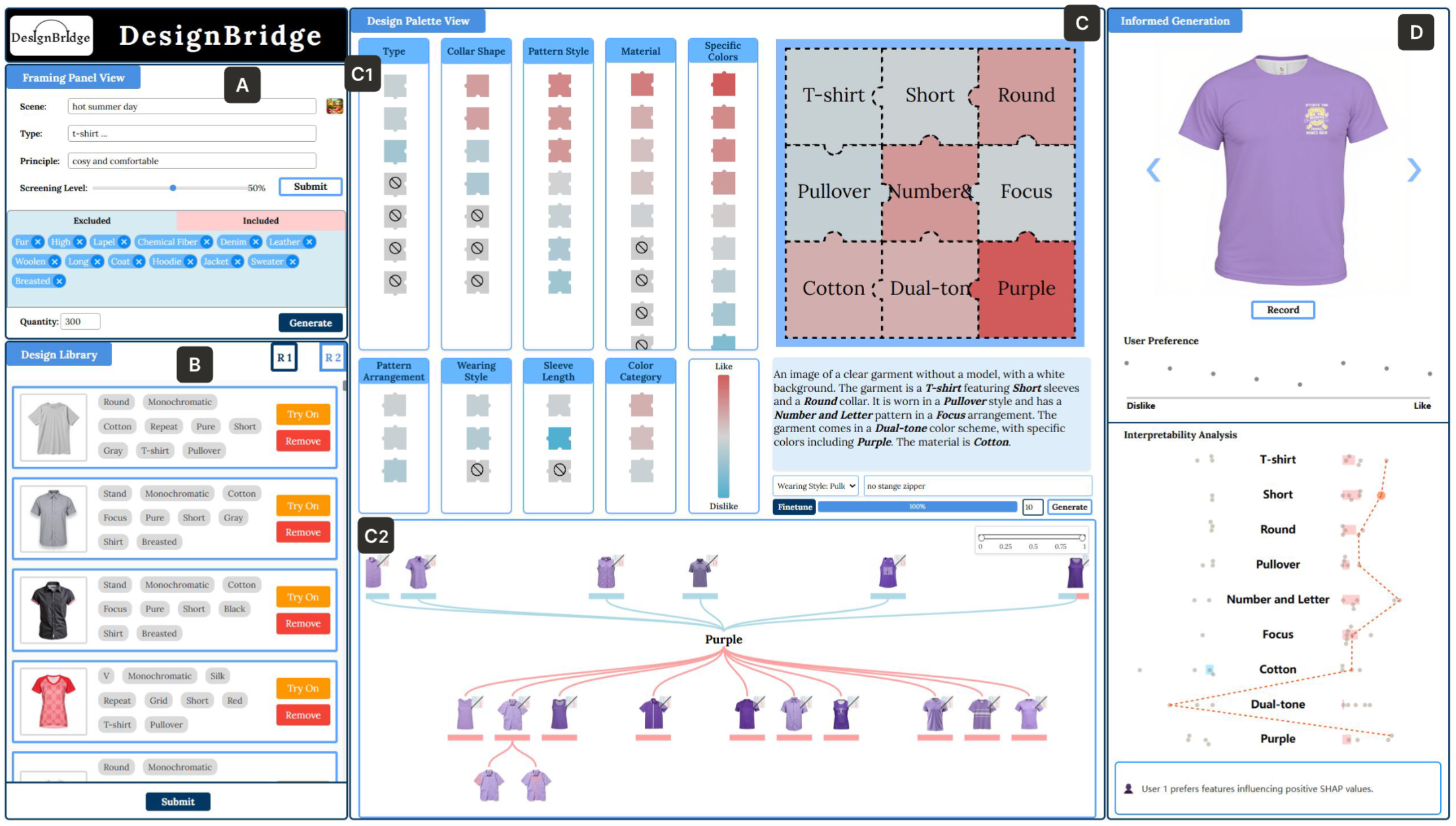
DesignBridge: Bridging Designer Expertise and User Preferences through AI-Enhanced Co-Design for Fashion
Yuheng Shao, Yuansong Xu, Yifan Jin, Shuhao Zhang, Wenxin Gu, Quan Li
PDF
This work focuses on improving collaboration between designers and users in fashion design. We conducted a formative study to understand the challenges in current co-design practices and then developed DesignBridge, an AI-enhanced system that connects designer expertise with user preferences. The system supports three stages: helping designers define initial concepts, enabling users to express preferences easily, and assisting designers in integrating this feedback into final designs. Our results show that DesignBridge makes it easier to collect and use user preferences, leading to more effective and balanced co-design outcomes.
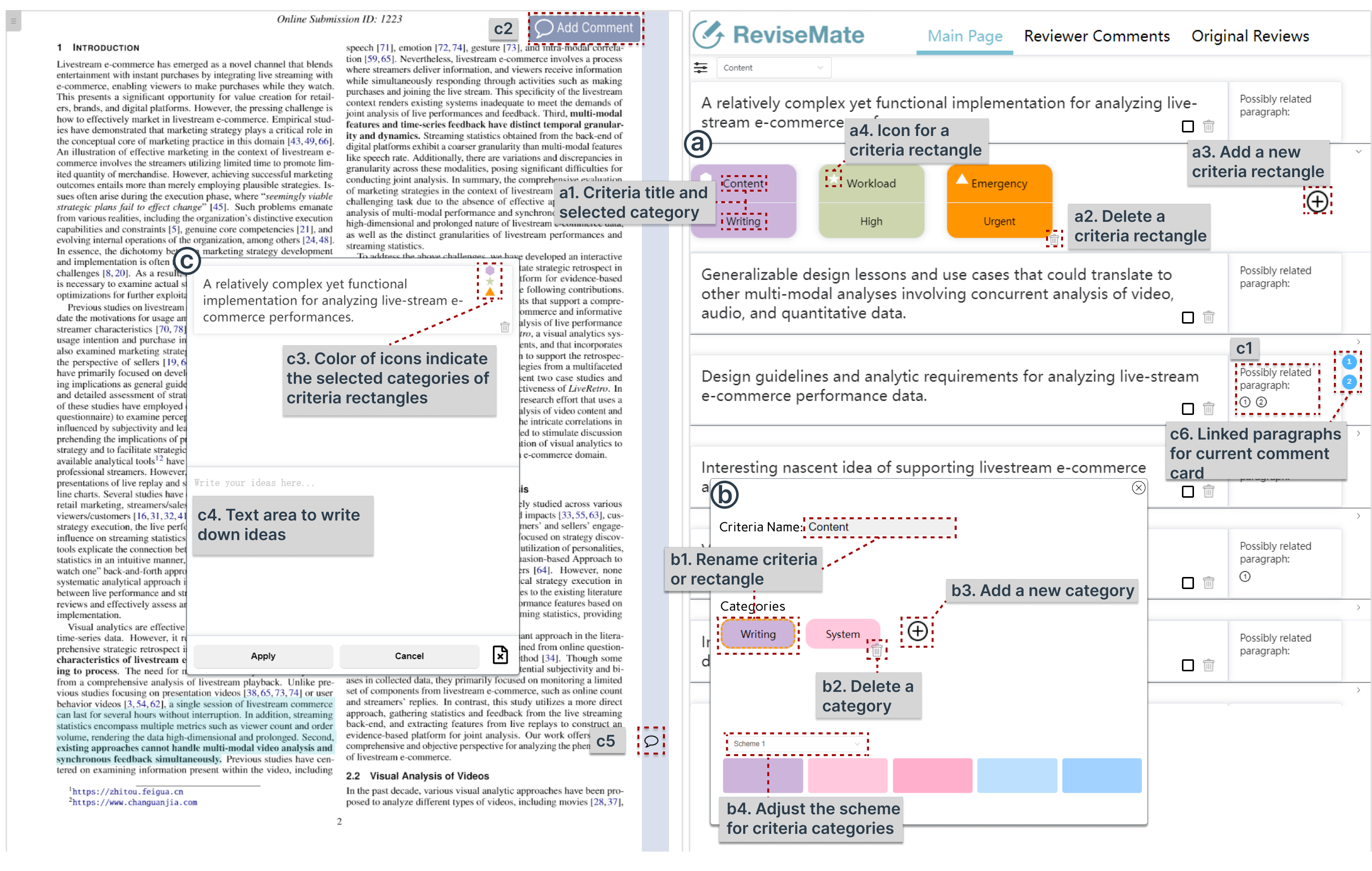
ReviseMate: Exploring Contextual Support for Digesting STEM Paper Reviews
Yuansong Xu, Shuhao Zhang, Yijie Fan, Shaohan Shi, Zhenhui Peng, Quan Li
PDF
We developed ReviseMate, an interactive system designed for researchers to effectively assimilating and integrating reviewer feedback to refine their papers and handle potential rebuttal phases in academic venues. A controlled user study demonstrated the superiority of ReviseMate over baseline methods, with positive feedback regarding user interaction. Subsequent field deployment further validated the effectiveness of ReviseMate in real-world review digestion scenarios.
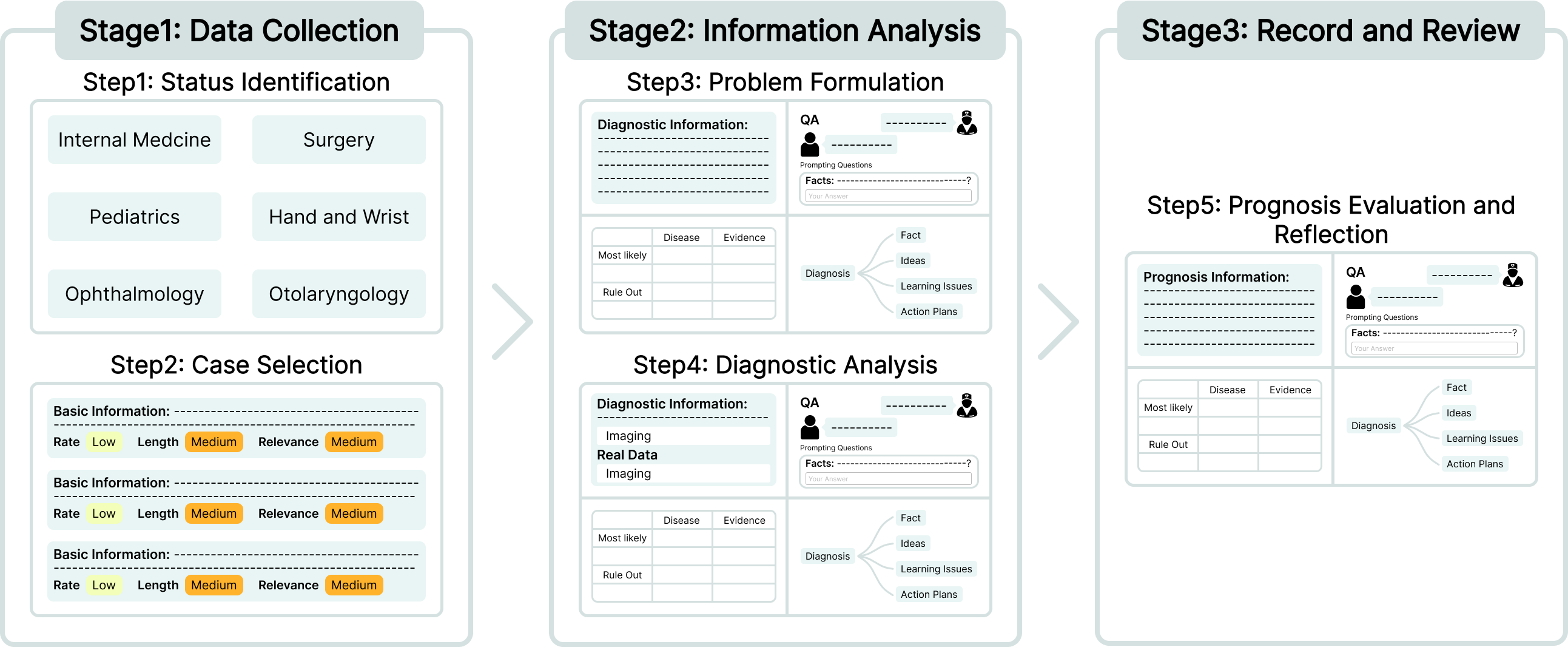
Advancing Problem-Based Learning with Clinical Reasoning for Improved Differential Diagnosis in Medical Education
Yuansong Xu, Yuheng Shao, Jiahe Dong, Shaohan Shi, Chang Jiang, Quan Li
PDF
We designed e-MedLearn, a learner-centered PBL system that supports more efficient application and practice of evidence-based clinical reasoning. Through controlled study and testing interviews, we gathered data to assess the system’s impact. The findings demonstrate that e-MedLearn improves PBL experiences and provides valuable insights for advancing clinical reasoning-based learning.
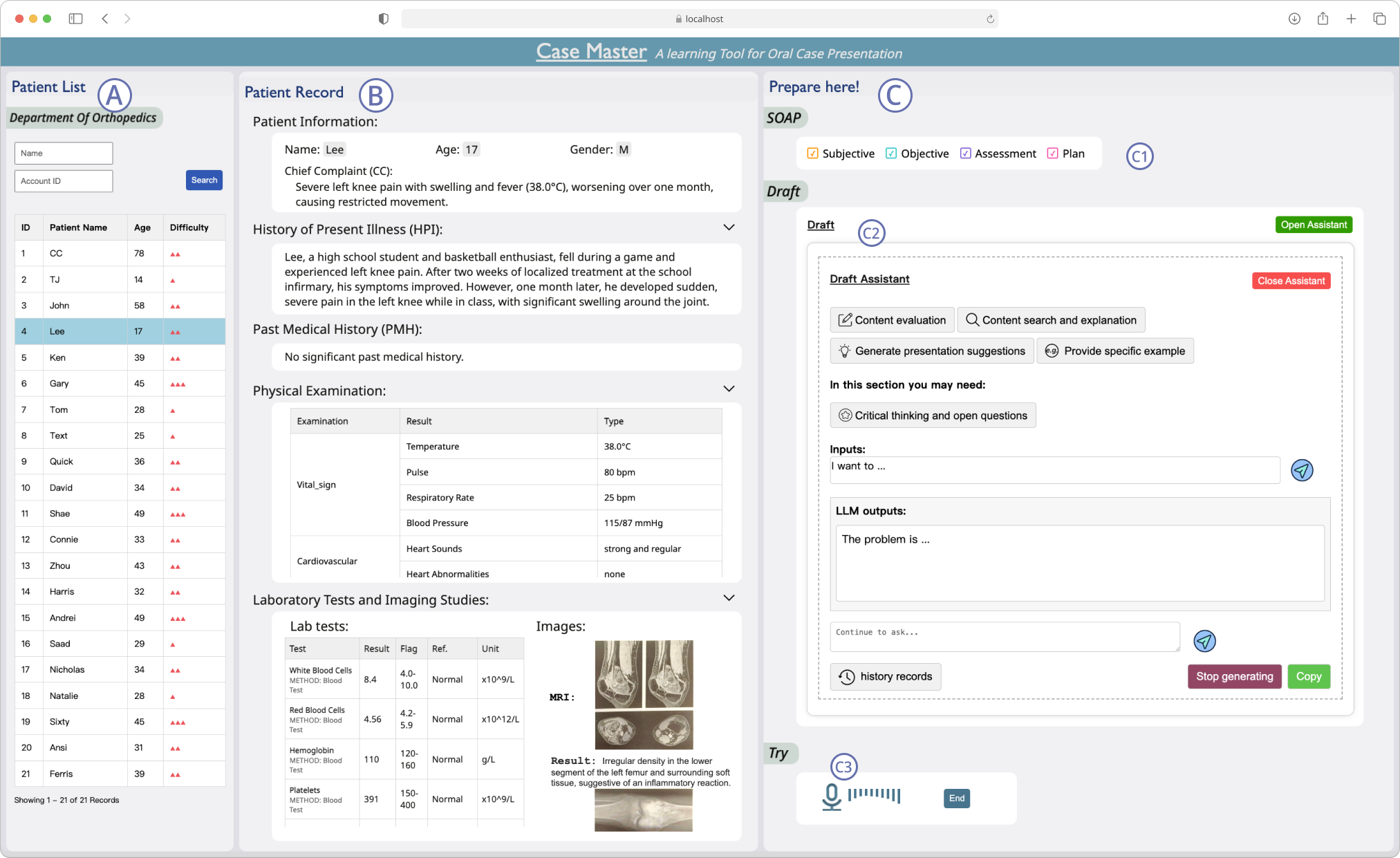
CaseMaster: Designing a Probe for Oral Case Presentation Training with LLM Assistance
Yang Ouyang, Yuansong Xu, Chang Jiang, Quan Li
PDF
We conducted a formative study with six medical educators and developed CaseMaster, an interactive probe that leverages LLM-generated content tailored to medical education to help users train their OCP skills. Through a preliminary user study from the expert perspective, we validated the effectiveness of the probe.
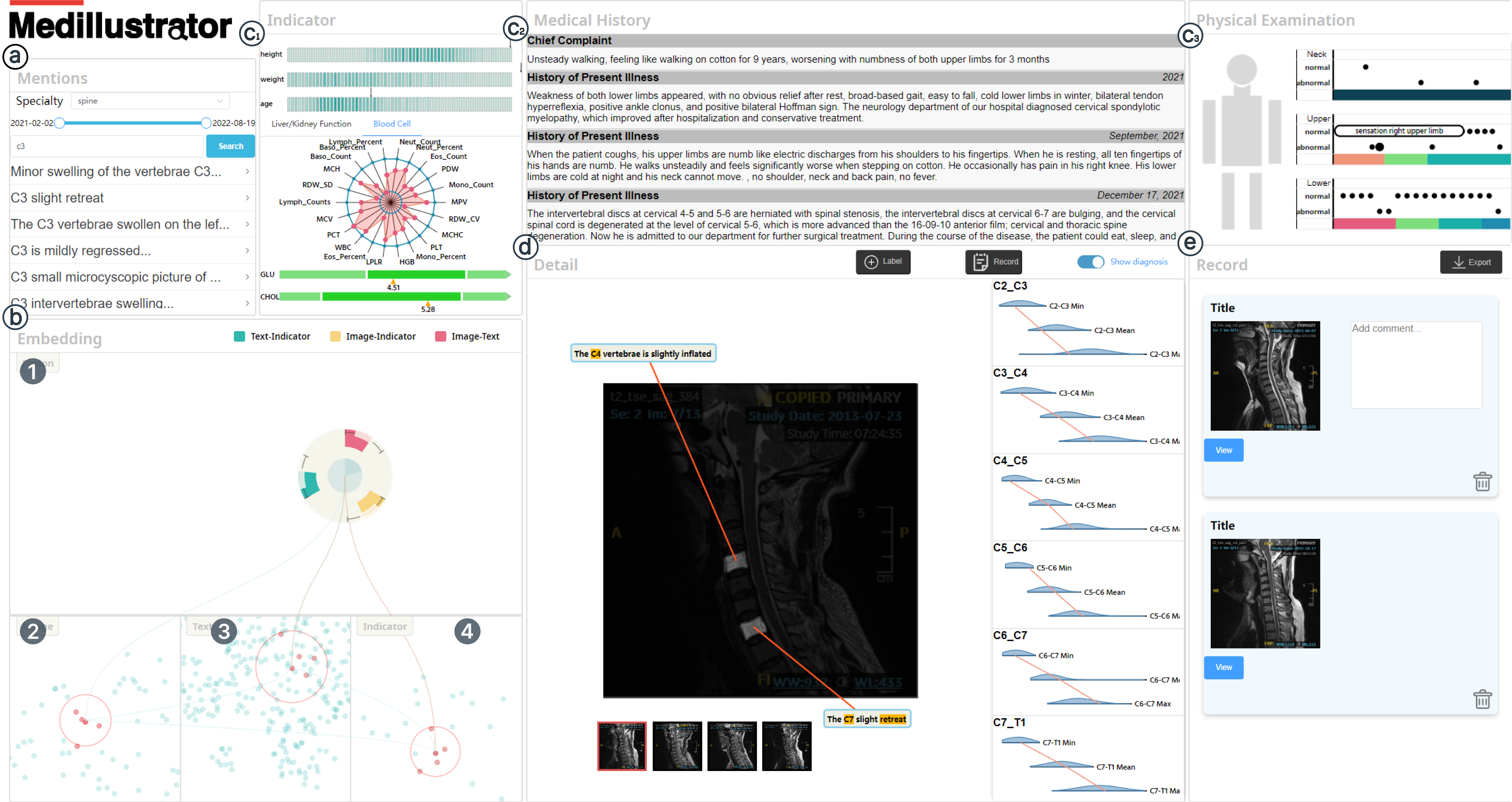
Medillustrator: Improving Retrospective Learning in Physicians’ Continuous Medical Education via Multimodal Diagnostic Data Alignment and Representation
Yuansong Xu, Jiahe Dong, Yijie Fan, Yuheng Shao, Chang Jiang, Lixia Jin, Yuanwu Cao, Quan Li
PDF
We introduce Medillustrator, a visual analytics system crafted to facilitate novice physicians’ retrospective learning. Our structured approach enables novice physicians to explore and review research cases at an overview level and analyze specific cases with consistent alignment of multimodal and reference data. Furthermore, physicians can record and review analyzed results to facilitate further retrospection.
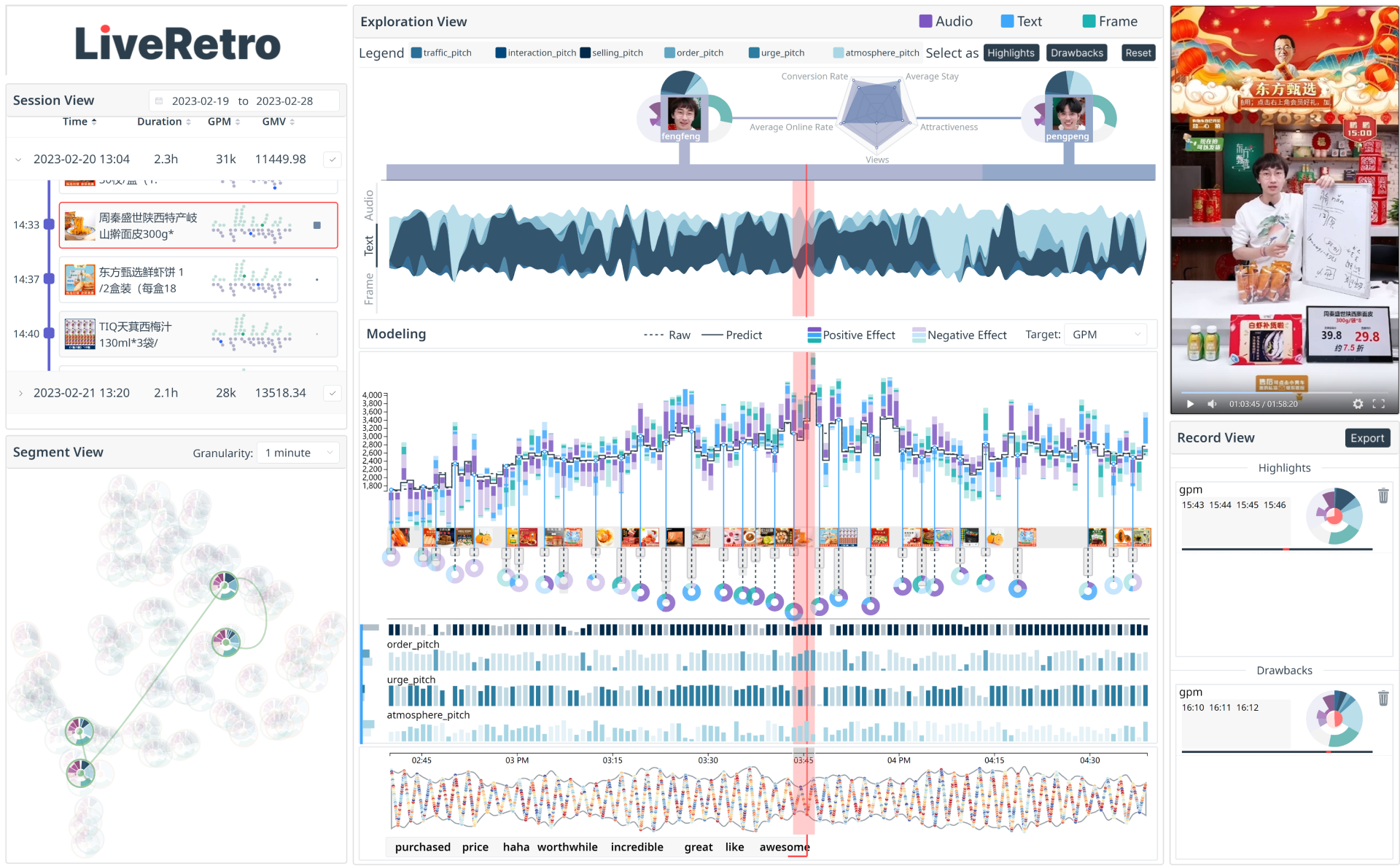
LiveRetro: Visual Analytics for Strategic Retrospect in Livestream E-Commerce
Yuchen Wu, Yuansong Xu, Shenghan Gao, Xingbo Wang, Wenkai Song, Zhiheng Nie, Xiaomeng Fan, Quan Li
PDF
This study identified computational features, formulated design requirements, and developed LiveRetro , an interactive visual analytics system. It enables comprehensive retrospective analysis of livestream e-commerce for streamers, viewers, and merchandise. LiveRetro employs enhanced visualization and time-series forecasting models to align performance features and feedback, identifying influences at channel, merchandise, feature, and segment levels.
📖 Educations
- 2023.09 - present, Ph.D. Student, Shanghaitech University, Shanghai
- 2019.09 - 2023.06, Undergraduate, Shanghaitech University, Shanghai